
Prompt
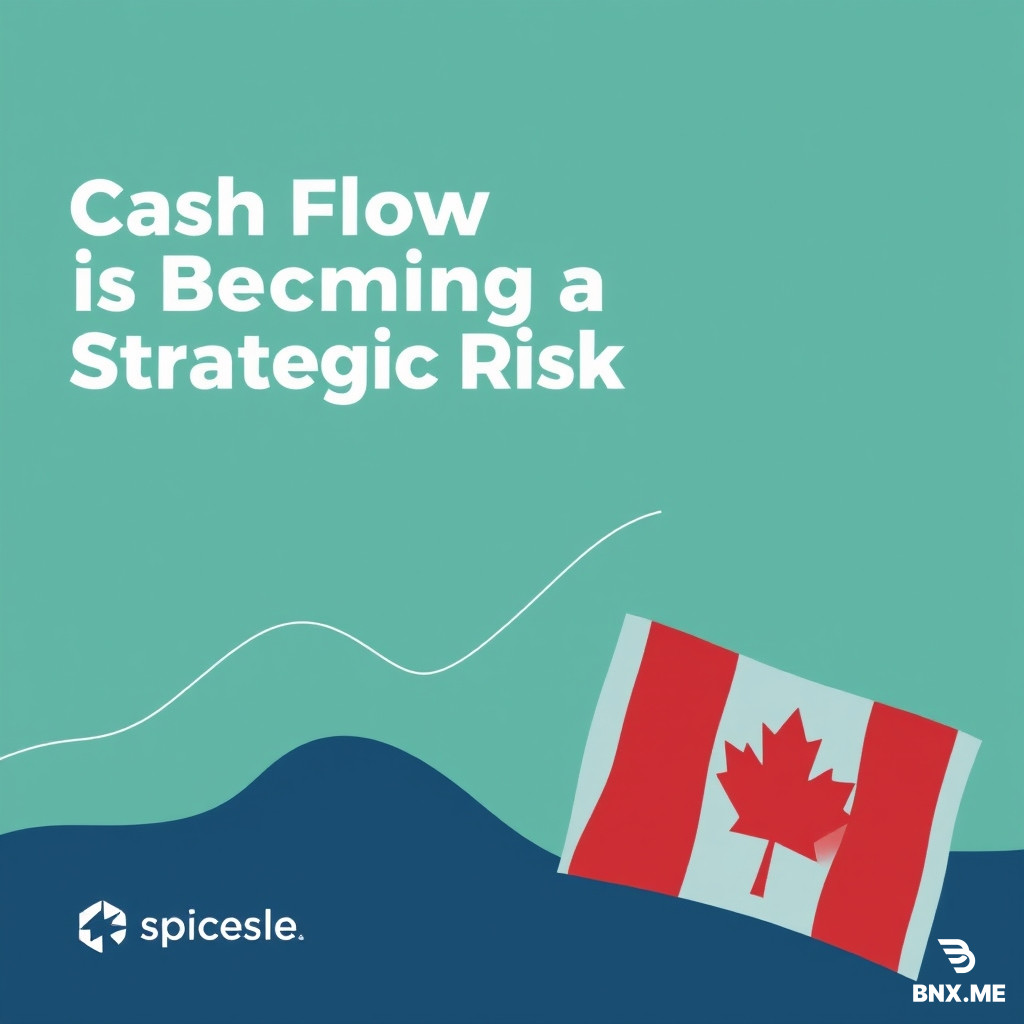
🚨 Cash Flow Is Becoming a Strategic Risk: Why Businesses Should Watch Receivables More Closely The economic environment is changing quickly. In Canada, the Bank of Canada has maintained its policy rate at 2.25%, while highlighting continued uncertainty from energy prices, geopolitical developments and new U.S. tariffs and Canadian countermeasures. (Bank of Canada) At the same time, Canadian insolvency activity remains elevated. In June 2026, total insolvencies were 11.5% higher than June 2025, while business insolvencies increased 5.5% year-over-year for the month. (ISED Canada) For businesses managing B2B receivables, these conditions create several measurable cash-flow risks: 🔹 Insolvency risk remains elevated; Canada recorded 13,254 insolvency filings in June 2026, an 11.5% increase year-over-year. While business insolvencies were lower year-over-year in Q1, they increased 9.8% quarter-over-quarter, showing that financial pressure remains uneven across the economy. (Business Examiner) 📊 Trade exposure is becoming a credit-risk factor; Canada’s economy continues to adjust to U.S. tariffs and a changing global trade environment. The federal government estimates that U.S. tariffs contributed to lower Canadian goods exports, weaker business investment and job losses in tariff-exposed industries. (Budget Canada) ⚠️ Inflation can quickly become a margin problem; the Bank of Canada has warned that higher energy prices are pushing inflation upward, while maintaining its 2% inflation target. For businesses operating on narrow margins, higher transportation, energy and input costs can reduce the cash available to service trade obligations. (Reuters) 💰 Interest rates still matter even after rate cuts; the Bank of Canada’s policy rate currently sits at 2.25%. Lower rates can provide relief, but businesses carrying significant debt remain exposed to refinancing costs, variable-rate borrowing and tighter lending conditions. (Reuters) 📈 Sector-specific risk is becoming increasingly important; in Q1 2026, Canadian business insolvencies increased year-over-year in sectors including construction (+15 filings), management of companies (+17), other services (+11), and finance & insurance (+10). Credit decisions should therefore consider industry conditions—not simply a customer’s historical payment record. (CAIRP) 🌎 Supply-chain and tariff uncertainty can affect customers before they become delinquent; changes in sourcing costs, export markets, inventory requirements and delivery conditions can weaken a company’s working-capital position well before an invoice becomes overdue. 📋 Working capital deserves closer attention; when payment cycles lengthen, suppliers effectively carry more of the customer’s financing burden. Even without a formal default, a growing receivables balance can reduce liquidity available for payroll, inventory, taxes and operating expenses. 💬 Payment behaviour can become an economic indicator; increasing DSO, repeated requests for extensions, partial payments and declining order volumes may provide earlier warning of financial stress than a traditional delinquency report. 💡 The important question for businesses in 2026 is not simply “Are our customers paying?” — it is “How resilient is their ability to keep paying if costs, financing conditions or trade pressures deteriorate?” In an economy where insolvency levels, trade uncertainty, energy costs and financing conditions continue to influence business performance, credit management is increasingly becoming a cash-flow and risk-management function—not simply a collections function Stay positive more imagery than text
Engine
BNX AI 1.0
Size
1:1
Created
08 September, 2026
Views
7
Downloads
0
Share
HTML Code
This is just one of the features of our unique system. Our model works very quickly and accurately. It uses advanced artificial intelligence and creates high-quality images.

ㅤBNX AI algorithms run on proprietary clusters built on NVIDIA GB300 NVL72 systems.

ㅤGeneration of images with any aspect ratio: 1:1, 2:3, 3:2, 4:5, 5:4, 4:3, 3:4, 16:9, 21:9, 9:16, 9:21

ㅤThere is nothing superfluous in our interface, only a prompt input field.

Our prices are on average 83% cheaper than those of large AI companies.

Even on the free plan, you can download generated images without restrictions.

Our own algorithm. Fast, modern. Almost perfect. Developed over 2 years.
Answers to frequently asked questions about working with the BNX AI 1.0 image generation system.
We are a young, technology-driven, growing startup. At the moment, we are not attracting funding from venture capital funds or business angels, so we would appreciate any support. You can sign up for the Enterprise plan, which will help us. 💙

When generating an image, you can open the options and enable stealth mode, then the images will not be added to the public database and no one will see them; they will be private.
We trained the BNX AI 1.0 algorithm for over a year, and it is equally adept at generating various types of images: illustrations, architecture, portraits, super-realistic images, 3D models, logos, and much more. We managed to achieve very good results when working with text, so it is easy to create both a logo and a poster.
You may use the images at your discretion. Professional and Enterprise plan users may use the images for any commercial purposes. They may also sell these images. We ask Standard plan users to include a link to bnx.me when publishing images, but this is not a mandatory requirement.